


Comfort Dental
Strawberries and Baking Soda for Whiter Teeth
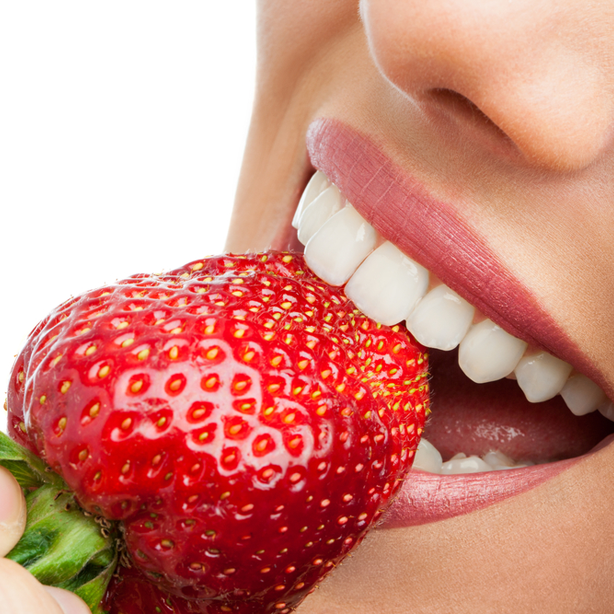
You may have heard the recent claim that a mixture of fruit and baking soda applied to the teeth will whiten them dramatically, inexpensively and in a much more “organic” way than traditional bleaching methods.
In particular, young adults and teens have shown themselves to be susceptible to this advice. They readily experiment with it and spread the idea throughout their community because the materials involved are so easily accessible.
While the claim has some merit and certainly comes from well-meaning sources, we feel that we should set the record straight. New research done on the subject from Professor So Ran Kwon of the University of Iowa shows that while the mixture does brighten the smile a bit, it does so merely by removing superficial debris. So although the teeth may look whiter, the effect is short-lived. As plaque and debris build up again, the teeth will darken.
In addition to that, the fruit and baking soda mixture method may reduce the surface hardness of your teeth, leaving them vulnerable to decay.
To achieve a permanently whiter smile, what you really need is a substance that penetrates into teeth and breaks down stain molecules, whitening teeth from the inside out for better and longer-lasting results.
If you want whiter teeth, we urge you to use ADA approved methods for achieving that brighter smile!
Dental Implants-What Should I Believe?
Dental Implants have become commonplace, with over 3 million people worldwide hosting some sort of implant. Unfortunately, their rising popularity has been accompanied by an increasing number of misconceptions about what they can and can’t do.
Let us help you to understand which of these common messages are true and which are fabricated.
Message #1: Dental implants are more expensive than traditional restorative methods.
Verdict: True and False. While the initial implant installation is more costly than other dental restorative procedures, over time, maintaining dental implants is much easier and cheaper. Other procedures require eventual replacement. For example, dentures require replacement after 5-10 years while dental bridges must be replaced every 7-10 years. So in the long run, dental implants can be less expensive than these alternative procedures.
Message #2: Dental implants are exceedingly painful.
Verdict: False. Like most forms of oral surgery, dental implant installation does involve some discomfort. However, patient accounts reveal that the pain is not worse than any typical tooth extraction as doctors use local anesthesia to address and minimize any discomfort during the procedure.
Message #3: Dental implant placement often fails.
Verdict: False. While dental implants do have the possibility of falling out, it is very rare for this to happen. In fact, reports show that 98% of dental implant surgeries are successful.
Message #4: Only young people should get dental implants.
Verdict: False. There is no reason healthy, elderly patients cannot receive implants. In fact, there are many cases of patients 90 and older undergoing dental implant placement surgery with great success!
Don’t let these common misconceptions get in the way of your decision to get dental implants. Give us a call…we’d be happy to discuss your concerns about dental implants with you to give you a better idea of what this procedure can do for you.
Porcelain Veneers for a Flawless Smile
Some patients come to us loving their smile but wanting just a little bit more in terms of aesthetics. To enhance your smile, we may suggest porcelain veneers. Porcelain veneers are often our go-to tool to correct minor imperfections on the surface of teeth or spacing issues.

Here are some frequently asked questions and answers about veneers:
Q: Are veneers heavy or thick? Will I feel them in my mouth?
A: No, in fact veneers are thinner than a fingernail, once they are in place you won’t even know they are there!
Q: How long do they last?
A: Veneers don’t last forever but if properly installed, veneers can last from 10-20 years. A great investment for an enhanced smile!
Q: How are they attached? Can they fall off?
A: Veneers are attached to your tooth with a very strong bonding compound. It is very rare that they would fall off.
Q: Do veneers look like natural teeth?
A: Porcelain is the perfect material to copy tooth enamel, as it is incorporates luster, shine and translucence to look just like your natural teeth.
Q: What if the surrounding teeth are a different color?
A: Generally what we recommend is that we use a whiter shade of porcelain for the veneer and perform tooth whitening in conjunction with the veneer process to give you a better match throughout your mouth.
Q: Do veneers stain?
A: No, porcelain veneers do not stain, even over time.
If you think veneers could enhance your smile, ask us if veneers are a good option for you!
Heart Disease – The Importance of Good Oral Hygiene
Did you know that poor oral hygiene could increase your chances of developing heart disease? Practicing good oral health habits isn’t just an important part of preventing tooth decay; it’s crucial in maintaining your overall health. But how are heart disease and oral health connected? What we’ve come to understand is that bacteria from infected gums can dislodge, enter the bloodstream and attach to blood vessels, which can increase clot formation. Clots decrease blood flow to the heart and in turn cause an elevation in blood pressure thus increasing the risk of a heart attack.
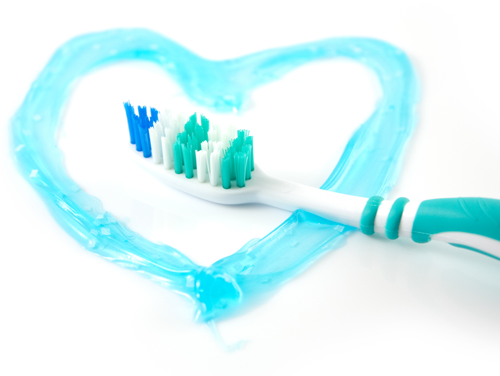
We can help patients who have a history of heart disease by examining them for any signs of oral pain, infection or inflammation. Brushing and flossing combined with annual check-ups will help to fight the harmful bacteria that cause inflammation and eventually lead to heart disease. Check out these oral hygiene facts and make sure to establish a routine to ensure a great smile and a healthy life.
According to the American Dental Hygienists Association and the Centers for Disease Control and Prevention:
- Eating healthy snacks like celery, carrots, or apples help clear away food loosely trapped in-between teeth.
- The leading oral health problem for infants is baby bottle tooth decay, which can be caused when babies are given a bottle filled with sugary liquids, like milk or juice, when put to bed.
- Nearly 78% of Americans have had at least one cavity by age 17.
- Men are more likely than women to have more severe dental diseases and oral cancer occurs twice as frequently in men as women.
- Three out of four patients don’t change their toothbrush as often as is recommended. Toothbrushes should be changed every two to three months and after illnesses.
Issues that go untreated can end up costing a lot more than routine visits to your dentist. Prevention through daily cleaning and regular office visits is the best for both your health and your budget. Remember, regardless of how old you are, it’s never too late to start taking serious care of your teeth and mouth.
Diabetes and Oral Health – A Two-Way Street
If you, a friend or a family member have diabetes, you may have heard that this common disease increases a person’s risk of gum disease and other oral health problems. But did you know that this relationship is a mutually distressing one? Not only does diabetes make gum disease worse, but gum disease can actually make diabetes worse too by interfering with blood-glucose management strategies.

Here, we shine some light on the relationship between diabetes and oral health, and what you can do about it.
Diabetes makes it difficult for the body to fight infection. Whether the infection is located in the mouth, the leg or any other part of the body, poor circulation suppresses the immune system, making it harder for the body’s natural infection fighting responders to do their job. This means that if you have diabetes, you are more prone to gum disease, and other oral health problems too such as thrush and dry mouth.
On the flip-side, gum disease can also make diabetes worse. Whenever the body is fighting illness or an infection (such as a cold or the flu or even gum disease), blood sugar spikes are harder to control with regular methods and thus extra monitoring and control-measures are required.
Are you wondering what you can do to minimize this damage? First and foremost, keep your blood sugar under control using the methods that your physician has prescribed. Next, practice good oral health maintenance with regular brushing and flossing. And finally, don’t skip regular trips to the dentist and other oral health professionals. If you have diabetes, you cannot afford to ignore this important part of your body.
Invisible Braces- Not Just for Looks
When most of us think of invisible braces such as Invisalign®, we naturally assume that their sole purpose is to enhance the aesthetic value of one’s smile.
And to a certain extent that assumption is true. For most people with braces of any type, the primary goal of straightening their teeth is improving their look. But did you know that there are actually added health benefits to having a straighter smile as well?
Here, we outline just a few reasons, outside of the obvious aesthetic benefits, that invisible braces can help you:
- Periodontal Health: Overcrowded teeth can result in swollen, red, irritated gums. More often than not, these symptoms are the result of periodontal disease. Braces help to straighten and evenly space teeth to allow for enhanced gum health.
- Better Cleaning Access: Because the clear teeth aligners are removable, you can do a better job of brushing and flossing your teeth, just as you would without braces. By contrast, traditional metal braces limit access to the surfaces and in-between areas of teeth, making it difficult to maintain a good brushing and flossing routine.
- Healthy Diet: Invisible braces are removable, which means that there are no restrictions to what you eat. This allows you to continue your healthy eating habits just as if you didn’t have braces at all. With traditional metal wires and braces, however, some people fall into the trap of eating only soft foods and thus miss out on much-needed nutrients.
- Overall Health: Because oral infections are thought to be related to other health issues in the body such as an increased risk of heart disease, stroke and diabetes, keeping your teeth properly spaced and straightened is an important first step toward better health throughout your body.
Allow us to enhance your smile both aesthetically and from an oral health standpoint as well with invisible braces!
Dental Implants- Five Things You May Not Know
How much do you know about dental implants? With the increasing popularity and availability of dental implant surgery worldwide, patients are gaining more and more knowledge about dental implants every day.
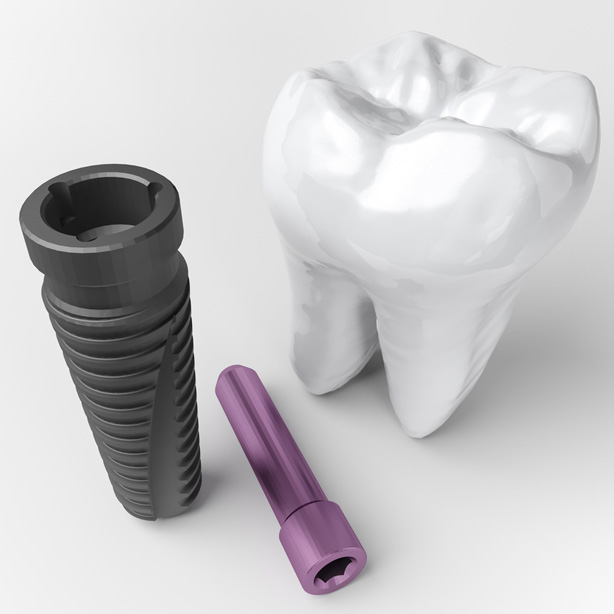
But did you know these five important facts?
- Dental implants are appropriate for almost all ages. Not just for the elderly, dental implants are frequently placed even in the mouths of young adults. As long as the jaw has stopped growing (after puberty; age 16 for girls and age 18 for boys), a dental implant can be placed with great success.
- The titanium post actually fuses (osseointegrates) with the natural jawbone. They grow together to form a stronger foundation for replacement teeth. So dental implants actually improve the bone structure in the jaw, they don’t just fill it in.
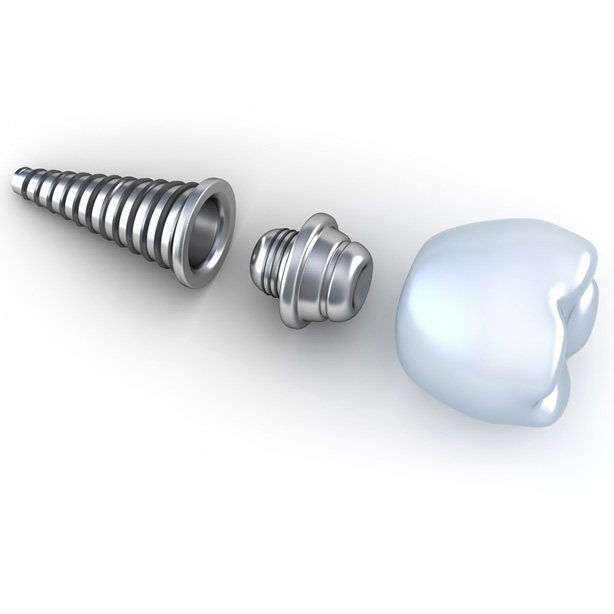
- The “dental implant” is actually just the titanium post, one of three parts of the whole process. Other parts used in the full procedure that we think of as “dental implant surgery” are known as the abutment (the connector) and the actual replacement tooth itself (the crown).
- Dental implants preserve jawbone, whereas other teeth replacement options can lead to bone deterioration. Bone is similar to muscle in that it must be used in order to maintain its mass. When a tooth goes missing and the site is left untreated, the jawbone underneath tends to deteriorate. Dental implants eliminate this problem by securing a natural-like tooth right into the jawbone and thus utilizing (and preserving) that area of bone.
- Dental implants protect their neighbors. By contrast, a traditional, tooth-supported bridge involves the grinding away of the teeth on either side to act as a hammock for the bridge. With dental implants, the jaw is the anchor and support for the artificial tooth.
The bottom line? Dental implants offer a safe and manageable alternative to traditional tooth replacement methods.
Traveling and Oral Health – Tips for the Holidays
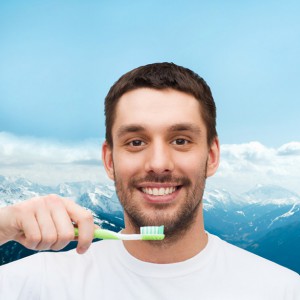 We don’t have to tell you: the winter holidays mark one of the busiest seasons of the year. With shopping, parties and vacations jam-packed on the calendar, it’s no wonder that many people take shortcuts when it comes to oral health maintenance during this time. If you are traveling during the holiday season and you want to avoid a January surprise cavity (or worse), here are some simple tooth travel tips to help you keep your smile intact.
- Don’t leave home with a toothache! If you suspect you have any lurking problems in your mouth, schedule an appointment prior to your travel date so that you don’t end up with a tooth emergency while out of town. Research emergency dental clinics in your destination city and have those numbers handy to ensure that your time off is as relaxing as possible.
- No one ever regrets buying travel-sized gear. Keeping a travel toothbrush, floss and toothpaste on hand in addition to trial sizes of your favorite toiletries reduces your packing time, and not just during the holidays.
- Splurge on probiotics! Diseases and germs run rampant in buses, airports and other communal places that you might encounter during your trip. Researchers believe that probiotics are not only good for the gut; they may help maintain optimal oral health too!
- Toothbrushes don’t last forever! Generally, dentists recommend that you buy a new toothbrush every two to three months when at home. However if you are traveling, your toothbrush is exposed to even more bacteria. It’s best to toss it when you return home and swap it for a fresh brush, even if it hasn’t hit the three-month mark yet.
- Chewing gum is a limitless oral-health-on-the-go tip! Bringing sugar-free gum with you has multiple benefits; not only does it taste good and make your breath smell fresh, but the gum can help remove food that may be stuck in your teeth as well, acting as a secondary toothbrush.
Dental Checkups – How Important Are They
 We know that for most people, going to the dentist’s office is not high on their list of favorite things to do. A visit to the dentist takes up valuable time in our busy, modern schedules!
So we are not surprised that we hear this question time and time again from our patients: “Is going to the dentist twice a year really worth it?” And the answer is always the same: “Absolutely!”
Why? We’ll give you two good reasons right here:
Reason #1: Save yourself from pain!
The fact of the matter is that dental problems do not simply heal themselves on their own. In our practice, we are trained to detect problems and fix them before they get out of hand, saving you pain (and money) down the road. Using the dentist’s office only as an emergency room when you have an agonizing toothache will only cause you more pain in the long run.
Reason #2: Save yourself money!
Regular checkups and cleanings are also relatively inexpensive when compared to the cost of fixing much bigger dental problems (for example, a tooth that requires a root canal or extraction). Let us treat your oral health problems before they become unnecessarily complicated and costly.
Twice a year for better oral health!
Most oral health professionals recommend that you have your gums and teeth cleaned and checked once every six months. If they appear healthy, then this interval may be extended.
Don’t wait until you have tooth pain that is out of control! If we see you regularly for check ups, we can avoid many of these bigger problems together! Call us to schedule your next checkup
Dental Implants – Are They Right for You?
 Not everyone is blessed with perfect teeth. Many people would tell you they lack the smile they’ve always wanted due to genetics, disease, and sometimes even accidents. Fortunately, we have a solution. With dental implants, you will no longer feel self-conscious about your smile; but rather delight in having a new and improved grin!
What are dental implants?
Technically, dental implants are replacement roots for missing teeth. First, the implant, a titanium screw, is inserted into the jawbone. Next, a removable or permanent replacement tooth is attached to the top of the implant to mirror the appearance of your natural teeth. Currently, over 3 million people worldwide have dental implants and the technology has reached a point where each procedure has a 98% success rate.
Why should I get dental implants?
Beyond simply improving the appearance of your smile, dental implants include many other benefits:
- Oral health: Unlike other restorative procedures, dental implants do not necessitate the reduction or alteration of neighboring teeth, thus resulting in improved oral health overall. Additionally, dental implants do not interfere with access to neighboring teeth, so it is no harder to brush or floss.
- Longevity: While other dental aides such as dentures and bridges inevitably require replacement, dental implants are extremely durable, lasting many more years and in some cases even a lifetime!
- Convenience: Dental implants do not ever need to be removed for activities such as eating, drinking and brushing, and do not require adhesives. They act, look and feel just like natural teeth!
How much do dental implants cost?
Dental insurance does not always cover the cost of dental implants. However, in the long run, dental implants are usually cheaper than other restorative procedures. Because they do not need to be replaced, the initial investment for implants is well worth the price.
Dental implants are becoming a popular trend in the world! Call us to set up an appointment to upgrade your smile!